Lake Eyre vs Lake Torrens: Which One Should You Visit?
At first glance, Lake Eyre and Lake Torrens look almost identical. Both are vast, white salt lakes in South Australia. Both sit in remote landscapes that feel untouched and endless.
So it’s natural to assume they offer the same kind of experience.
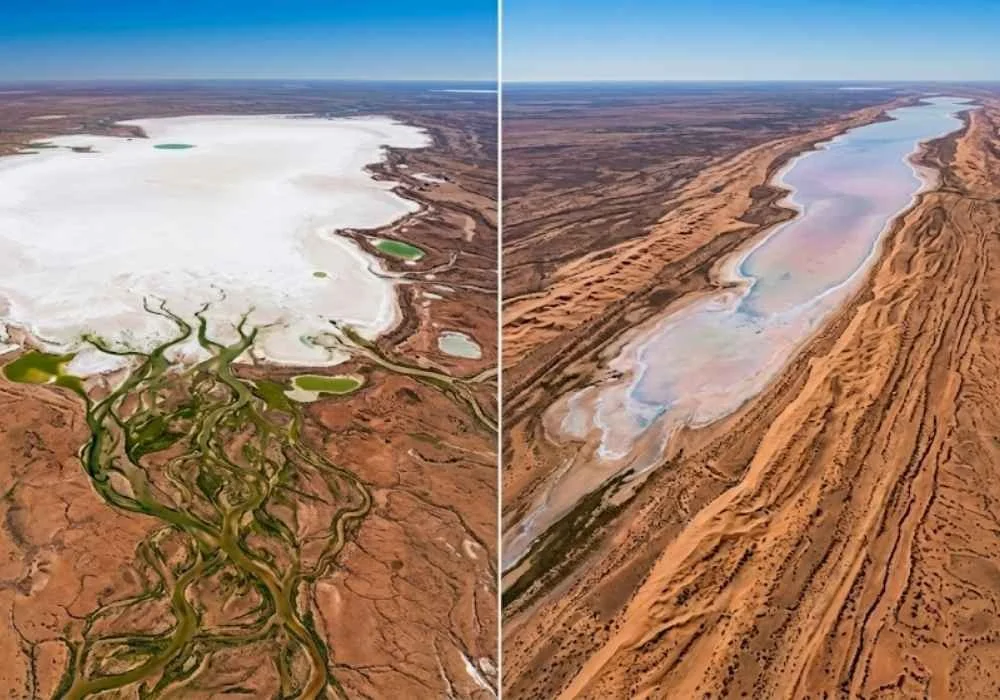
But once you start planning a trip, the differences become clear. These two lakes are not interchangeable. The way you access them, what you see, and how you experience them are quite different.
If you’re deciding where to go, this guide will help you avoid confusion and choose the option that actually matches what you’re looking for.
Here’s a simple breakdown to get your bearings:
| Factor | Lake Eyre | Lake Torrens |
|---|---|---|
| Size | Australia’s largest lake | Second largest salt lake |
| Water Presence | Occasionally fills | Rarely holds visible water |
| Accessibility | Defined access routes | Highly restricted |
| Tourism | Well-developed | Minimal |
| Experience | Dynamic and changing | Remote and minimal |
On paper, they seem similar. In reality, the experience is very different.
What Lake Eyre Is Really Like
Lake Eyre is the better-known of the two, and for good reason. It’s not just a salt lake. It’s a destination that changes depending on when you visit.
Most of the time, the lake appears as a massive white salt pan stretching to the horizon. The scale alone is enough to leave an impression. But what makes it unique is its ability to transform.
After heavy rainfall in inland Australia, water flows into the basin and slowly fills parts of the lake. When that happens, the landscape changes completely. The dry salt becomes a reflective surface, and birdlife begins to arrive in large numbers.
Even when it’s dry, there’s plenty to experience.
Lake Eyre scenic flights give you a sense of scale you can’t get from the ground
Camping areas like Halligan Bay let you stay close to the lake
Tracks and routes are established enough to make access manageable
It’s not an easy destination, but it’s one that’s been shaped for travellers. You can plan for it, reach it, and experience it without feeling completely cut off.
That balance between remoteness and accessibility is what makes it stand out.
What Lake Torrens Is Really Like
Lake Torrens sits to the west of Lake Eyre and is often overlooked in comparison.
It’s just as vast, just as striking in its own way, but far less developed. There are no established tourism routes that take you directly onto the lake in the same way. Access is limited, and large sections are surrounded by pastoral leases and restricted areas.
The lake itself is almost always dry. Unlike Lake Eyre, it rarely experiences the kind of flooding that creates dramatic transformations. What you see is usually a consistent, stark landscape.
That doesn’t mean it lacks appeal.
For some travellers, that untouched, raw environment is exactly what they’re after. There’s a sense of isolation here that’s hard to find elsewhere.
But it also means you need to be far more self-reliant. There’s little infrastructure, minimal guidance, and fewer defined entry points.
In simple terms, Lake Torrens is not built for tourism. It’s built for those who already understand what they’re getting into.
Accessibility and Travel Difficulty
This is where the difference becomes obvious very quickly.
Getting to Lake Eyre still requires effort. You’re dealing with long drives, unsealed roads, and remote conditions. But there are recognised routes, established entry points, and a general understanding of how to get there.
Places like William Creek and Marree act as gateways. From there, you can follow known tracks or join guided experiences.
With Lake Torrens, it’s a different story.
Access is far more restricted. You can’t simply drive up and expect to reach the lake easily. Permissions, local knowledge, and careful planning are often required.
For most travellers, especially first-time visitors to the outback, this creates a barrier. It’s not just about distance. It’s about knowing where you can and cannot go.
If your priority is a straightforward trip, Lake Eyre is the more practical choice.
What You’ll Actually Experience
One of the biggest concerns people have is whether they’ll feel like they’ve made the right choice once they get there.
At Lake Eyre, the experience has variety.
Depending on conditions, you might see dry salt stretching endlessly, shallow water reflecting the sky, or birdlife gathering in large numbers. Even small changes in weather and light can alter how the landscape feels.
There’s a sense that something is always happening, even if it’s subtle.
At Lake Torrens, the experience is more consistent.
You’re likely to encounter a dry, open expanse with very little variation. The appeal comes from its simplicity and scale rather than change.
For some, that’s exactly the point. For others, it can feel underwhelming if they were expecting something more dynamic.
Understanding this difference helps you avoid disappointment.
Wildlife and Natural Activity
Wildlife is another area where these lakes differ.
Lake Eyre becomes a temporary hub for birdlife when water is present. Pelicans, in particular, are known to arrive in large numbers during flood periods. The lake essentially comes alive for a time before returning to its dry state.
Lake Torrens does not offer the same level of visible activity. Because it rarely holds water, the conditions that attract large numbers of birds are less common.
If seeing wildlife is important to you, Lake Eyre gives you a much better chance.
Photography and Visual Appeal
Both lakes offer striking visuals, but in different ways.
Lake Eyre provides more variety.
Reflections when water is present
Textured salt patterns when dry
Changing light conditions throughout the day
It’s a location where you can spend time experimenting and capturing different perspectives.
Lake Torrens leans more towards minimalism.
The landscape is stark and consistent. Wide angles, strong contrast, and simple compositions work best here.
It’s visually powerful, but less diverse.
Tourism Infrastructure and Support
This is often overlooked but makes a big difference during the trip.
Lake Eyre has developed enough infrastructure to support visitors.
Scenic flights operate regularly
Camping areas are available
Guided 3 days tour to 5 days tour provide structured access
You’re not completely on your own. There’s a system in place that helps you navigate the experience.
Lake Torrens offers almost none of this.
You’re relying on your own planning, your own navigation, and your own judgement.
For experienced travellers, that’s part of the appeal. For most people, it adds unnecessary complexity.
So, Which One Should You Visit?
If you’re visiting for the first time, the answer is clear.
Choose Lake Eyre.
It offers a more complete experience. You have better access, more to see, and a higher chance of feeling like the trip was worth the effort.
Lake Torrens suits a different kind of traveller. Someone who already has experience in remote areas and is specifically looking for isolation and simplicity.
It’s not about one being better than the other in absolute terms. It’s about which one aligns with what you want from the trip.
For most people, Lake Eyre delivers more.
Common Misconceptions
One of the biggest misconceptions is that both lakes are essentially the same.
They might look similar in photos, but the experience on the ground is very different.
Another assumption is that both are equally accessible. In reality, Lake Torrens is far more restricted and requires more effort to approach.
There’s also the idea that both lakes will have water. That’s rarely the case, especially for Lake Torrens.
Clearing up these misconceptions early helps you plan with realistic expectations.
Conclusion
Choosing between Lake Eyre and Lake Torrens comes down to understanding what each one offers.
One is dynamic, accessible, and shaped for visitors. The other is raw, restricted, and best suited to experienced travellers.
If you want a well-rounded outback experience with fewer unknowns, Lake Eyre is the safer and more rewarding option.
Make your choice based on what kind of trip you want, not just how similar they look on a map.
Frequently Asked Questions
-
No. While both are large salt lakes in South Australia, they differ in accessibility, tourism development, and how often they hold water.
-
Not easily. Access is limited and often restricted. It requires more planning and local knowledge compared to Lake Eyre.
-
Lake Eyre is the largest lake in Australia, while Lake Torrens is the second largest.
-
For most travellers, Lake Eyre is the better choice due to its accessibility, variety, and available experiences.