Lake Eyre in Winter vs Summer: When Should You Really Go?
Planning a trip to Lake Eyre sounds exciting until you hit one question that’s harder than it should be. When is the best time to visit?
At first glance, it feels simple. Pick a season, book your trip, and go. But Lake Eyre does not behave like most destinations. The experience changes dramatically depending on the time of year. Winter and summer are not just different, they are almost opposite.
One gives you comfort, access, and a relaxed outback experience. The other tests your limits with heat, uncertainty, and changing conditions.
If you get the timing right, the trip can be unforgettable. If you get it wrong, it can feel uncomfortable, rushed, or even disappointing.
This guide breaks it down properly so you can decide with confidence.
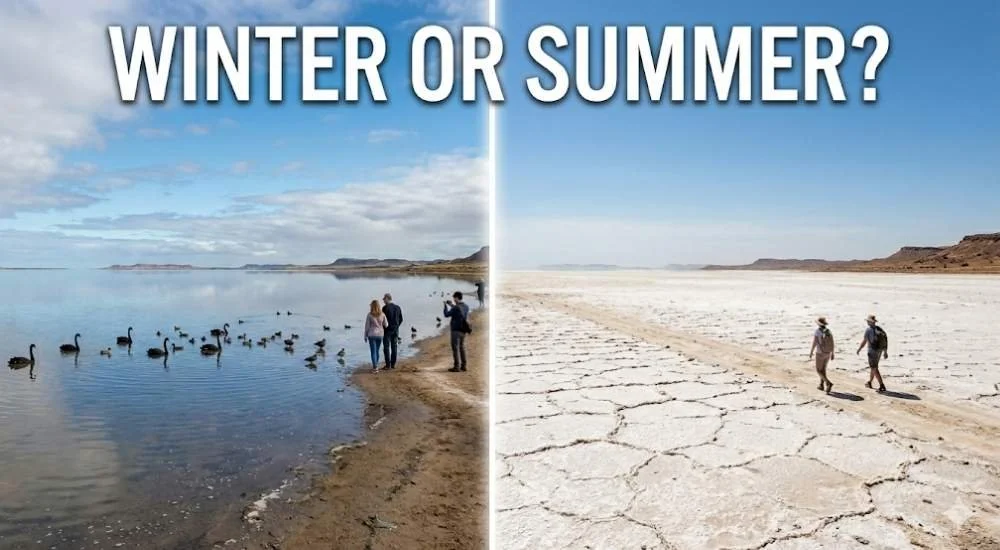
Before getting into the details, here’s a clear side-by-side view of what to expect:
| Factor | Winter (May to September) | Summer (December to February) |
|---|---|---|
| Temperature | Mild, 15 to 25°C | Extreme heat, 35 to 45°C |
| Accessibility | Generally easier | Often limited or closed |
| Wildlife Activity | Higher, especially after rain | Lower |
| Comfort Level | High | Low |
| Travel Risk | Moderate | High |
If you’re looking for a quick answer, most people choose winter. But there’s more to it than that.
What Lake Eyre is Like in Winter
Winter is when Lake Eyre becomes accessible for the majority of travellers. The temperatures drop to a comfortable range, making long drives, camping, and exploring much easier.
During the day, you’ll usually experience mild weather that allows you to move around without constantly worrying about heat. Evenings can get cool, but nothing extreme if you’re prepared.
This is also the time when most people plan their trips, which means roads are more frequently used and conditions are generally more predictable. Tracks like the Oodnadatta and Birdsville routes are often in better shape compared to summer months.
From an experience point of view, winter gives you time. You can stop, walk, take photos, and actually enjoy the landscape without feeling like you need to rush back into shade or air conditioning.
Wildlife is another bonus. If water has reached the lake earlier in the year, winter is when birdlife becomes more visible. Pelicans, in particular, are known to gather in large numbers when conditions are right.
Of course, winter is not perfect. The lake may still be dry, which can catch some visitors off guard if they were expecting water. But the dry lake has its own appeal. The salt crust, the endless horizon, and the silence create a very different but equally powerful experience.
If your priority is comfort, accessibility, and a well-rounded trip, winter is hard to beat.
What Lake Eyre is Like in Summer
Summer at Lake Eyre is a completely different story.
Temperatures regularly climb above 40°C, and that kind of heat changes everything. Simple activities like walking, setting up camp, or even standing outside for long periods become challenging.
The environment becomes harsher, and the margin for error shrinks. Dehydration, fatigue, and vehicle issues are more common in these conditions.
Travel during summer also becomes less predictable. Rainfall, especially in Queensland, can affect access routes. Flooding might sound exciting, but it often leads to road closures and restricted access.
This is where expectations can get tricky. Many people associate Lake Eyre with dramatic flooding events, and those often begin after summer rains. But seeing that transformation in person is not always straightforward.
You might plan your trip hoping to witness water filling the lake, only to find roads closed or conditions unsafe for travel.
There are some advantages to summer. Fewer travellers means less crowding, and if you do manage to time it right, the landscape can look completely different. But these benefits come with trade-offs that most visitors are not prepared for.
For experienced outback travellers, summer can be manageable with the right preparation. For most people, it’s not the ideal time to visit.
Understanding Weather and Unpredictability
One of the biggest challenges when planning a trip to Lake Eyre is that local weather does not tell the full story.
Rainfall hundreds of kilometres away can determine whether the lake fills, whether birdlife arrives, and whether roads remain open. Water flows slowly through inland river systems, and floodplains take time to respond.
This means you could have clear skies above you, while access routes remain closed due to earlier rainfall elsewhere.
Winter offers more stability in this sense. Summer brings more unpredictability.
Understanding this helps manage expectations. Lake Eyre is not a destination where you can guarantee a specific experience based on dates alone. It rewards flexibility and awareness more than rigid planning.
Which Season is Best for Your Trip?
The answer depends on what you’re looking for, but for most travellers, the choice becomes clear once you break it down.
If your priority is comfort, winter is the better option. Mild temperatures make everything easier, from driving to exploring.
If you’re interested in wildlife, winter again has the advantage, especially if water has reached the lake earlier in the year.
If your main goal is to see water, timing becomes more complicated. Flood events are not guaranteed, and chasing them can lead to disappointment if conditions don’t align.
Photography also tends to favour winter. Softer light, clearer conditions, and more manageable temperatures allow you to spend time capturing the landscape properly.
Summer, on the other hand, suits a very specific type of traveller. Someone experienced, well prepared, and comfortable dealing with extreme conditions.
For most people, winter offers a better balance of safety, comfort, and overall experience.
Safety and Risk Considerations
Lake Eyre is not dangerous by default, but the level of risk changes depending on the season.
In winter, risks are manageable. Cooler temperatures reduce physical strain, and road conditions are generally more stable. With basic preparation, most travellers can handle the trip comfortably.
In summer, risks increase significantly. Heat becomes a constant factor, and small issues can escalate quickly. A vehicle problem or delay that might be inconvenient in winter can become serious in summer conditions.
Access is another factor. Road closures after rain are more common during warmer months, and being forced to change plans at the last minute can be frustrating and costly.
Understanding these differences helps you choose a time that matches your comfort level and experience.
Travel Planning Tips Based on Season
If you’re heading out in winter, planning is more straightforward. Book accommodation or tours in advance, as this is the peak travel period. Expect more visitors, but also better access and support.
For summer travel, preparation needs to be more detailed. Carry extra water, fuel, and supplies. Be ready for sudden changes in conditions. And most importantly, consider whether self-driving is the right choice.
In many cases, scenic flights or guided tours offer a safer and more comfortable way to experience Lake Eyre during warmer months.
Choosing the right approach can make the difference between a stressful trip and an enjoyable one.
So, Should You Visit in Winter or Summer?
For the majority of travellers, winter is the clear winner.
It offers better conditions, easier access, and a more enjoyable overall experience. You can take your time, explore properly, and focus on what makes Lake Eyre special rather than dealing with extreme heat or uncertainty.
Summer is not off limits, but it requires a different mindset and a higher level of preparation. It suits experienced travellers who understand the risks and are comfortable managing them.
If you’re visiting for the first time, winter gives you the best chance of getting it right.
Conclusion
Lake Eyre is not a place where timing can be an afterthought. The season you choose shapes the entire experience.
Winter gives you comfort, access, and the freedom to explore without pressure. Summer brings intensity, unpredictability, and a higher level of challenge.
If you want the best chance of enjoying your trip without unnecessary stress, winter is the safest and most rewarding option.
Plan with realistic expectations, stay flexible, and choose the season that matches how you want to experience this unique part of Australia.
Frequently Asked Questions
-
For most people, winter is the better choice. It offers cooler temperatures, easier access, and a more comfortable travel experience.
-
Yes, but it requires careful planning and experience with outback travel. The heat and changing conditions make it more challenging than winter visits.
-
Water typically arrives after heavy rainfall in upstream regions, often during or after summer. However, timing is unpredictable and not guaranteed.
-
No. Winter temperatures are generally mild during the day and cool at night, making it one of the most comfortable times to visit.