Driving to Lake Eyre (Kati Thanda): 4WD Routes, Conditions & What to Know
Driving to Lake Eyre (Kati Thanda) is absolutely possible, but it’s not a casual road trip. The lake sits around 750 kilometres north of Adelaide, deep in South Australia’s outback, and there are no sealed roads to its edge. Access is strictly via 4WD-only Public Access Routes (PARs) that cross pastoral land and change conditions quickly with weather.
For travellers prepared to plan properly, the reward is one of Australia’s most remote and memorable landscapes. Most visitors approach the lake from William Creek or Marree, securing the right permits and checking road conditions before leaving sealed roads behind. This guide breaks down the legal access routes, vehicle requirements, best timing, and safety essentials so you can decide whether driving to Lake Eyre is right for you.
Main Access Routes to Lake Eyre
There are two official Public Access Routes (PARs) that allow legal vehicle access to Lake Eyre. These tracks are signposted, maintained only minimally, and cross working pastoral stations, no landholder permission is required as long as you stay on the route.
Official 4WD Access Routes
| Route | Starting Point | Distance to Lake | Conditions | Best For |
|---|---|---|---|---|
| Halligan Bay PAR | William Creek (7km south on Oodnadatta Track) | ~60km | Soft sand, bulldust, claypans; closed Dec 1–Mar 15 | Closest access, camping, birdlife |
| Level Post Bay PAR | Marree (3km west) via Muloorina Station | ~95km | Rutted dirt, gibber plains; variable after rain | Madigan Gulf views |
From Adelaide
Allow 12–14 hours driving time
Route: Adelaide → Leigh Creek → Marree or William Creek
Roads are sealed until you reach the PAR turnoffs
From Stuart Highway / Coober Pedy
Travel east toward William Creek
This is the most common approach for outback travellers
Vehicle and Preparation Requirements
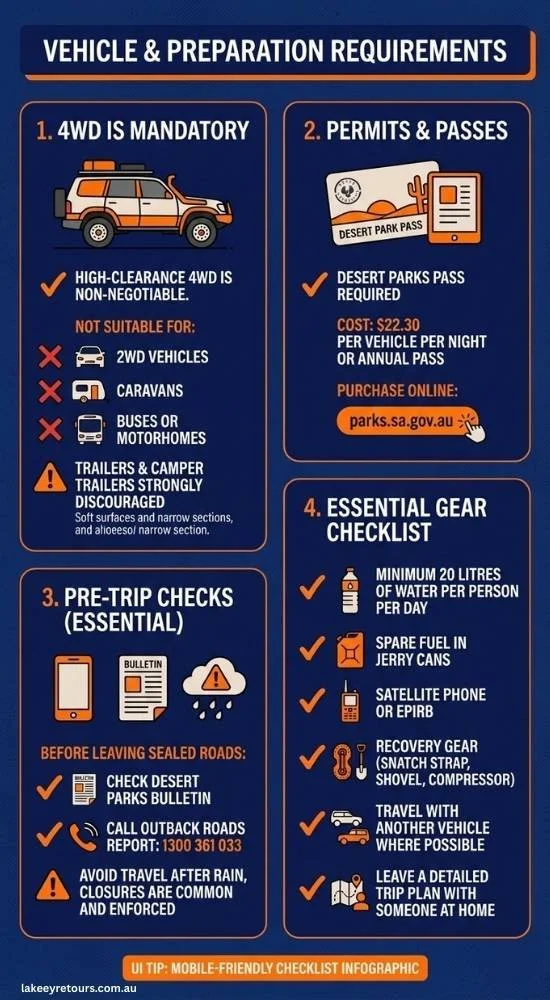
4WD Is Mandatory
A high-clearance 4WD is non-negotiable. These tracks are not suitable for:
2WD vehicles
Caravans
Buses or motorhomes
Trailers and camper trailers are strongly discouraged due to soft surfaces and narrow sections.
Permits and Passes
Desert Parks Pass required
Cost: $22.30 per vehicle per night or annual pass
Purchase online via parks.sa.gov.au
Pre-Trip Checks (Essential)
Before leaving sealed roads:
Check Desert Parks Bulletin
Call Outback Roads Report: 1300 361 033
Avoid travel after rain, closures are common and enforced
Essential Gear Checklist
Minimum 20 litres of water per person per day
Spare fuel in jerry cans
Satellite phone or EPIRB
Recovery gear (snatch strap, shovel, compressor)
Travel with another vehicle where possible
Leave a detailed trip plan with someone at home
Best Times to Drive and Current Conditions
Best Season
The ideal time to drive to Lake Eyre is May to October:
Cooler daytime temperatures
More stable road conditions
Reduced risk of heat-related breakdowns
Summer travel is not recommended due to extreme heat and seasonal track closures.
Flood Conditions
Flood events can dramatically improve scenery and wildlife viewing, but they also:
Soften claypans
Increase bogging risk
Trigger sudden road closures
Always check BOM rainfall and inflow reports before departure.
2026 Access Note
If you are planning a three-day, four-day, or longer tour in 2026, post-monsoon conditions can vary significantly. Public access routes remain unimproved dirt tracks, and access may change from week to week.
Alternatives to Driving
If you don’t have a suitable vehicle, or prefer not to risk track conditions, there are excellent alternatives.
Scenic Flights
Depart from William Creek
20–30 minute flights
Prices typically start from $150+
Best way to see the lake’s full scale
Guided Tours
Depart from Marree or William Creek
Fully guided 4WD trips
No vehicle preparation required
These options are especially popular during flood years.
Safety and Outback Etiquette
Stay strictly on marked tracks
Do not drive on salt pans or lakebeds
Respect Arabana Country and cultural sites
Take all rubbish out with you
In an Emergency
UHF radio may work near William Creek
Airstrips are present but not guaranteed
Always download offline maps before leaving mobile coverage
Conclusion
Driving to Lake Eyre is a genuine outback journey, not a casual detour. With a capable 4WD, the right permits, and careful planning, it’s an unforgettable experience. Without preparation, it can quickly become risky. Plan well, and the outback will reward you.
Frequently Asked Questions
-
No. The access tracks are too rough and often sandy.tion text goes here
-
Not recommended. Unhook at William Creek if necessary.
-
Allow 2–4 hours in good conditions.